
Havre de Grace: Growth of a city is an intriguing story. Much of it is similar to other communities of the early colonies. Still, much of it is unique. The key is to notice those similarities and the uniqueness. For in that blend is the story of ‘community’ adjusting to changing times. As we celebrate America250, it’s amazing how much we can learn and put to use today.
Of the 16 alphabetically presented industries covered only two remain today, proposing time and technology has radically altered the economic playing field. Those left are granite quarrying and somewhat surprisingly soapstone mining and processing. Indeed, the Harford County business landscape is radically different today with specialty stores offering products and services to a highly mobile society.
from Heavy industries of Yesteryear – Harford County’s Rural Heritage.
by Jack L. Shagena, Jr. and Henry C. Peden, Jr. (c)2015 (available at Bahoukas)
The above quote is a fitting introduction to our posts on Growth of a City. It’s difficult to cover everything, but we’re trying to provide an overview. We are reminded that, when we talk about the ‘good old days’ or preserving a building, we might ask: “What time period is that?” As you’ll see, in many ways we’ve changed a great deal over the past 250 years. And yet, there is much that is the same.
NOTE: In the late 1700s, families came to Havre de Grace to purchase our very popular herring, making it something of a tourist event, staying in town with their families, sometimes for a week. For all those ‘locals’ who decry tourism, it has always been a part of our city. For example, you’ll find it during the period of the railroads and during the exciting racetrack days.
FISHING
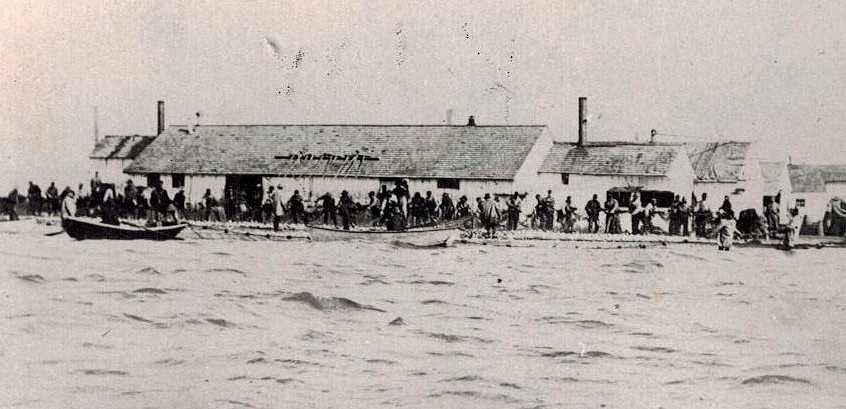
The Native Americans were fishing here long before the Europeans arrived.
Fishing, which since the beginning has played an important part in the growth of Havre de Grace, first as one of the principal sources of food for its people and later as an industry which supported hundreds of them reached its peak between 1820 and 1830.
. . .
By 1760 herring salted at Havre de Grace was being sold in practically all the eastern colonies. Shipments were made by water and settlers came by overland trail from long distances in Pennsylvania, Delaware and Western Maryland to haul their own supplies. In 1820 fishing methods were improved by the use of a float or long distance seine, which was the invention of Asahel Bailey of Havre de Grace. The famous Susquehanna herring became known all over the country and there was hardly a home in any eastern state in which it was not one of the principal items of the daily diet.The merchants and individuals who came to Havre de Grace to pick up their fish brought a thriving business to hotels and businessmen of the town. They often stayed as long as a week, bringing their families with them and enjoying the trip as a kind of gala event.
. . .
Naturally, such enormous annual harvests of fish finally had the inevvitable effct, and after 1880 the run of herring gradually dropped each year, until now there are times when there is actually a shortage of fish in Havre e Grace. Laws for the conservation of the fish have been in effect for some years, so there iso likelihood that the succulent shad and the tasty herring will disappear entirely from the waters of the Susquehanna.
from History of Havre de Grace, “The Town We Live In” by Elias W. Kidwiler, (c)1947

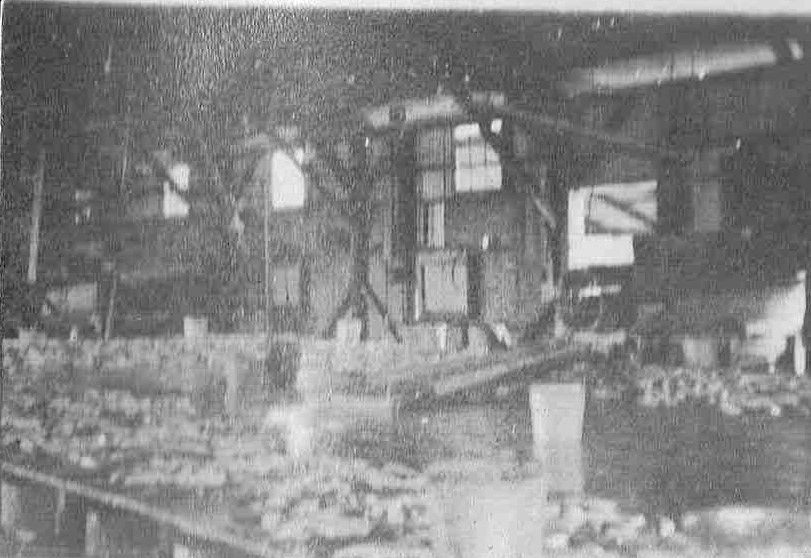
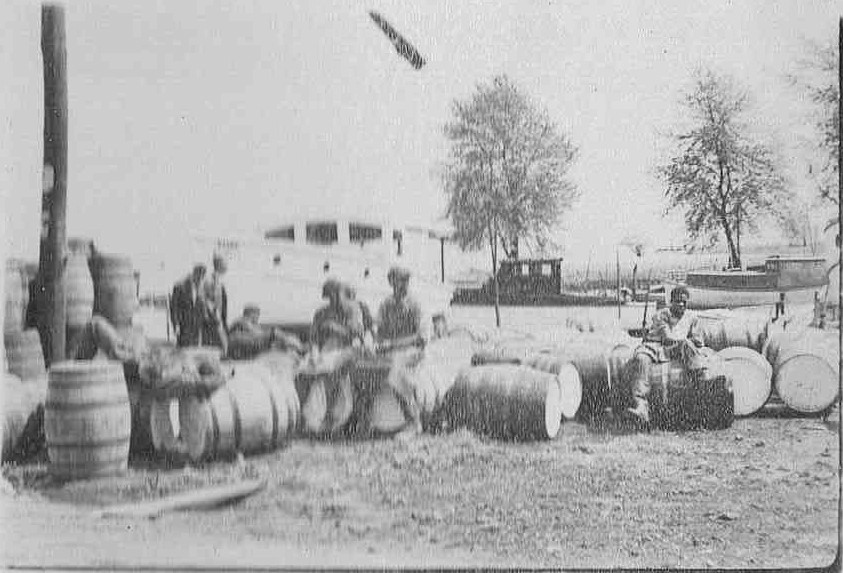
Fish Packing Plant , Water Street, Havre de Grace. Thank you to Jeanne Baynes for the above photos.
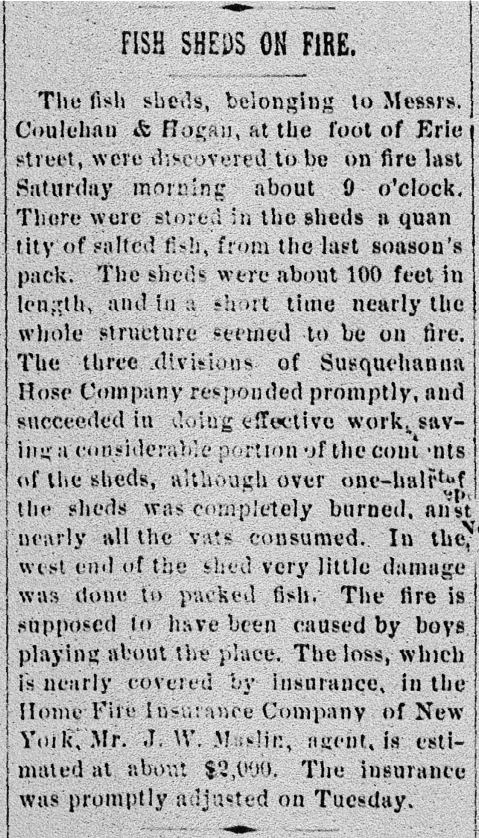
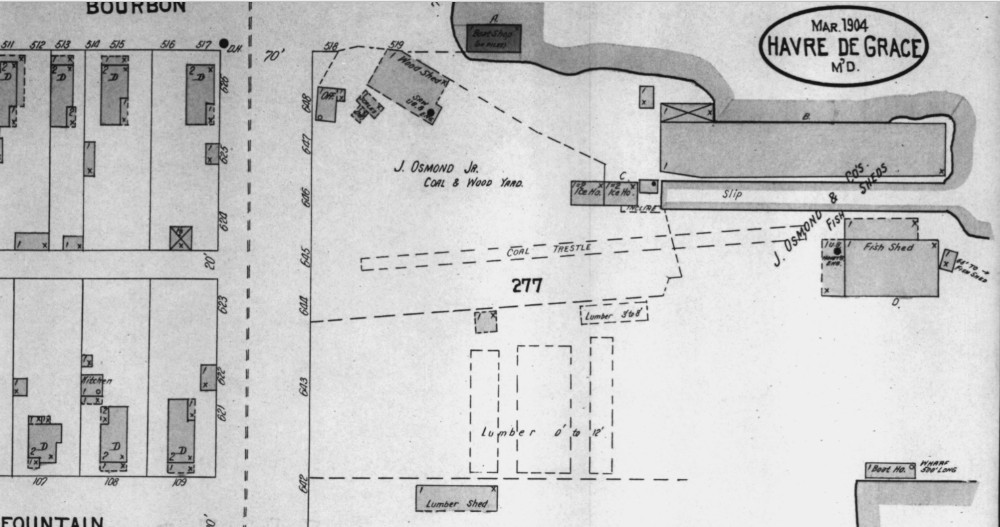
1884 – More Shad Bakes
“The party embarked at Havre de Grace on a sloop which was well stocked with materials of comfort, and which sped down the river drawn by a tug at a fifteen-knot gait.” so read the Sun of May 7, 1884. After a stop at the government fish hatchery it was off to the float of Herman C. Osmond for some observations, but more importantly, for a shad bake. On the previous day there ahd been six hauls of the seine landing 100,000 herring, 120 shad, 800 rockfish, 45 eels, and many white perch and “yellow neds.” Thus there was an ample supply of fish for the lunch, which was an al fresco affair amid much revelry beginning at 4 p.m.
from Heavy industries of Yesteryear – Harford County’s Rural Heritage.
by Jack L. Shagena, Jr. and Henry C. Peden, Jr. (c)2015 (available at Bahoukas)
Hunting
We don’t have much information about hunting and trapping in the early colonial days. But there’s no doubt that it was a key factor in the growth of the area. There was hunting and trapping on, what is now, Garrett Island. And plenty of waterfowl hunting.
Wild waterfowl have been hunted for meat, down, and feathers worldwide since prehistoric times. Ducks, geese, and swans appear in European cave paintings from the last ice age.
. . .
Rise of modern waterfowl hunting
Modern waterfowl hunting began in the 17th century with the matchlock rifle. Later flintlock blunderbuss and percussion cap guns were used. Shotguns were loaded with black powder and lead shot through the muzzle until the late 19th century. The transition from muzzle to breechloading shotguns was largely driven by innovations made by gunmakers such as Joseph Manton, at which time wildfowling was extremely popular in England. Both the shotgun choke and smokeless powder was invented in the late 19th century which allowed for longer range shooting with the shotgun. With the advent of punt guns hunters could kill dozens of birds with a single blast.
European settlers in America hunted waterfowl with great zeal, as the supply of waterfowl seemed unlimited in the Atlantic coast. As more immigrants came to the Americas in the 19th century, the need for more food became greater. Market hunting started to take form, to supply the local population living along the East Coast with fresh ducks and geese. Live ducks were used as decoys to attract other waterfowl, something that today is considered animal cruelty. During the fall migrations, the skies were filled with waterfowl. Places such as Chesapeake Bay, Delaware Bay, and Barnegat Bay were hunted extensively. In the Chesapeake Bay in the 1930s one of the biggest threats to waterfowl was local poachers using flat boats with swivel cannons that killed entire flocks with one shot.
from wikipedia
The trapping of fur bearing animals was the principal occupation of the first men to come to this part of the New World
. . . fur bearing animals, game and fish were all so plentiful in Eastern Maryland that the first settlements established here were for trapping and trading exclusively, the settlers depending on game and fish for their sustenance and the sale of furs for their livelihood.
The first settlement on Palmer’s Island [now Garrett Island] was to have been maintained by hunting and trapping and Claiborne took over the island in 1637 because of its value as a trapping and trading outpost. Although his men planted corn they did not rely on crops for their food, supplementing supplies shipped them from Jamestown with fish and game.
from History of Havre de Grace, “The Town We Live In” by Elias W. Kidwiler, (c)1947
CONCORD POINT LIGHTHOUSE
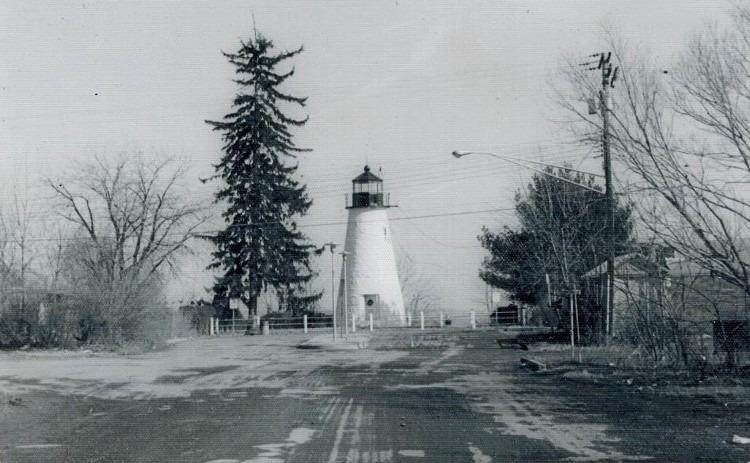
Concord Point Lighthouse
In 1827, in recognition of the navigation obstacles (shoals) in the upper Chesapeake Bay around Havre de Grace, the Federal government constructed a light tower on Concord Point and a short distance away the keeper’s dwelling. It was built by local entrepreneur John Donahoo, and later John O’Neill, the celebrated hero of Havre de Gace in the War of 1812, was appointed its first keeper.
from Havre de Grace – Its Historic Past, its charming present, and its promising Future,
by Jack L. Shagena, Jr. and Henry C. peden, Jr., (c) 2018
CLICK HERE to read more about the lighthouse and John O’Neill, and CLICK HERE to listen to an interview with Jane Jacksteit, a resident whose passion was to save the lighthouse after years of decay.
Access to the Susquehanna River that flows into the Upper Chesapeake Bay and roads going north and south gave Havre de Grace a unique position for trade, both import and export. The natural resources around us were perfect, including wood and the ability to manufacture pig iron.
MILLS
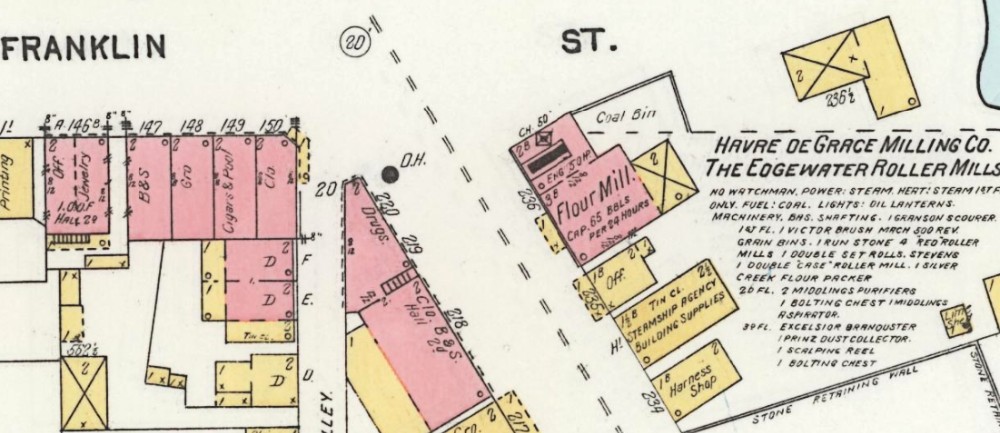
Havre de Grace Milling Company
… from the 1860s to 1896, a brick grist and grain mill called the Havre de Grace Milling Company stood here with its tall chimney visible from some distance away. The 1887 Maryland Business Directory listed John L. Cook (1851-1906) as proprietor of the Mill that was a manufacturer of “high grade roller flour” and supplied grain to James Cameron at the Livery Stables at 601 Franklin Street. Samuel Reasin Jones (1870-1916) began working in the Mill in 1890 and after five years he and his brother, Armon F. Jones (1877-1931) became the owners. They renamed the Mill as the Edgewater Roller Mills. They made flour, feed, and grist mill products and when The Graw Racetrack opened in 1912 on the edge of town the Mill was one of the main suppliers of grain for the 600-700 horses each season until 1924.
from Historic Havre de grace website
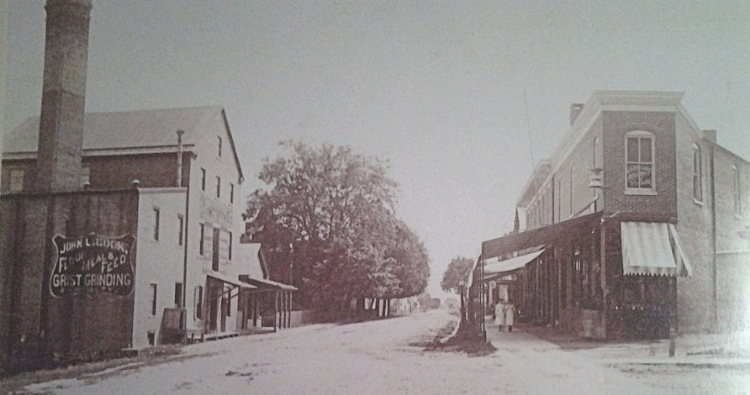
Photo of Havre de Grace Milling Company, John L. Cook, proprietor. Now MacGregor’s Restaurant!
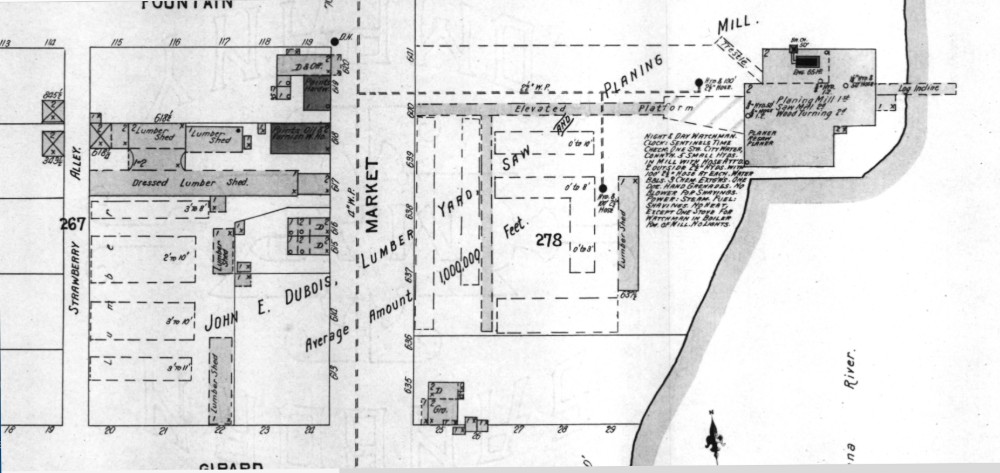
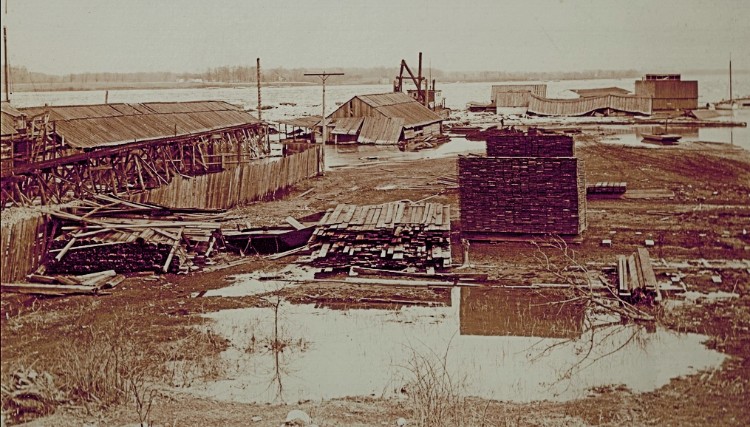
DuBois Saw Mill and Lumber Yard
A local resident, Arthur Vosbury, was manager of the Havre de Grace Branch of the Binghamton, New York, DuBois Lumber Company that was located along the water from Fountain to Girard Streets beginning in 1858. At the Mill, logs shipped downriver on rafts were used for building materials with even the rafts being taken apart for the lumber. Many structures in town were framed from the trimmed logs.
The John DuBois Saw Mill and Lumber Yard is shown extending into the river at Fountain Street on Martenet’s 1878 Map of Harford County, with its office at 300 Market Street. In August 1888 the Mill advertised in the Havre de Grace Republican that they sold lumber for “parking barns,” and “tomato and peach crates.” By 1899 many buildings associated with the mill were crowding the waterfront on Market Street between Bourbon and Fountain Streets as well as the whole block from Market Street west to Strawberry Alley.
from HISTORIC HAVRE DE GRACE website
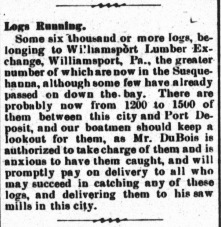
Interesting article – imagine 1000 – 1500 logs floating down the Susquehanna. Sure makes it tough for boaters!!!
IRON WORKS
Writing in 1776 about Iron Manufacture of the American Colonies, John B. Pearse observed that the colonies “were originally settled for the purpose of trade . . . [and] it thus happened that iron, so necessary a material to the early colonists, [also] occupied a most important place in the scheme of early trading companies. And this occurred, not only through the [export] needs of the colonies, but on account of the dearness of iron and the scarcity of wood” in England.
Wood was required to sustain Great Britain’s ships and mastery of the seas and iron was the raw material of manufactured tools, weapons, and also very necessary for ship building. Thus, the destruction of their forests to sustain iron manufacture was at odds with national security and economic prosperity. As early as 1557 the use of oak, beech, and ash were banned in the production of charcoal fuel for iron furnaces. Research Michael Robbins noted, “By 1720, England was producing only 18,000 tons of pig iron per year, and was importing over 20,000 tons, mostly from Sweden.”
The obvious answer to this dilemma, it seemed, was to import pig iron from the colonies where ore and wood were plentiful – manufacture it into axes, saws, shovels, picks, and pots – and then sell these articles to the colonists. While a small amoung of pig iron had been imported from Maryland in 1718 (three tons, probably from a “bloomery forge” at North east in Cecil county), the quantity of pig iron from that area was about to drastically increase.
from Heavy industries of Yesteryear – Harford County’s Rural Heritage.
by Jack L. Shagena, Jr. and Henry C. Peden, Jr. (c)2015 (available at Bahoukas)
JUST WHAT IS “PIG IRON?”
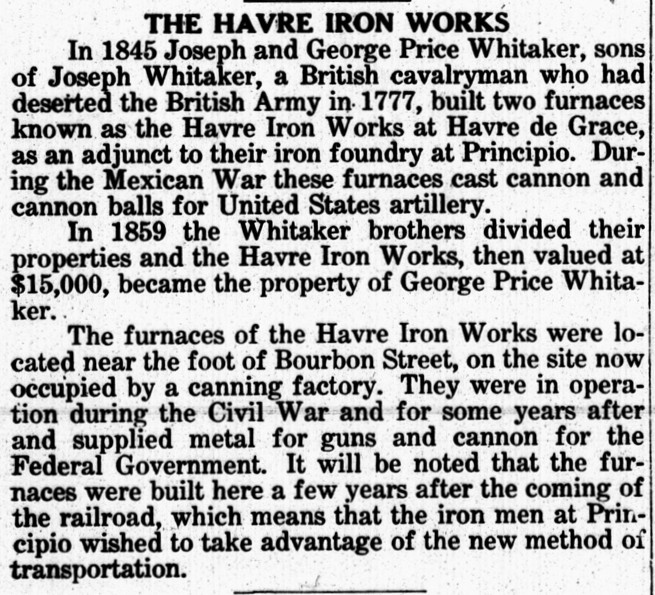
Whitaker
Havre Iron Works (Bourbon Furnace)
In 1842 and again in 1843 an iron furnace was constructed in Havre de Grace at the end of Bourbon Street. At this time the furnaces were two blocks south of the boat dock where the Philadelphia, Wilmington, and Baltimore Railroad was ferried across the Susquehanna River to Perryville in Cecil County. The furnaces were built and owned by George P. Whitaker of Principio, who most likely was interested in taking advantage of rail transportation for pig iron.
They were described in 1909 as “charcoal steam furnaces, 30 feet high and 9 feet wide at the boshes; and on eo fthem in 1856, in twenty-one weeks, produced 1,265 tons of pig iron.” An earlier report in 1859 called them the “Rough and Ready Anthracite Steam Furnaces,” and added the 1856 tonnage was made “out of brown hematite ores mixed with some red fossil, some grey magnetic, and some of the ‘bone’ carbonate ores of the tertiary formations in the neighbohood.”
Reeves & Company Furnace
The Harford Madisonian of January 3, 1845 reported on a new “Iron Furnace at Havre de Grace.” It had been erected by Messrs. Reeves & Company and was enclosed by a large frame building with the inside machinery moved by steam. It was close to the water having two wharves and six coal kilns for the burning of charcoal. Wood was delivered by vessels and the pig iron shipped from Havre de Grace by water. The company employed about 25 hands and the newspaper noted, “The firm we anticipate, will do a profitable business.” No other information about the iron furnace has been found, thus it is surmised the facility was relatively short lived.
from Heavy industries of Yesteryear – Harford County’s Rural Heritage.
by Jack L. Shagena, Jr. and Henry C. Peden, Jr. (c)2015 (available at Bahoukas)
The above description gives an idea of the size of the iron works at the end of Bourbon St in Havre de Grace.
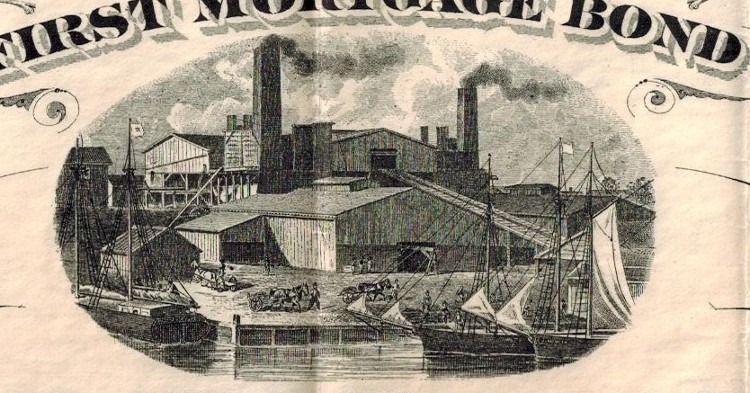
Get the details about local iron works in Havre de Grace on our blog. CLICK HERE
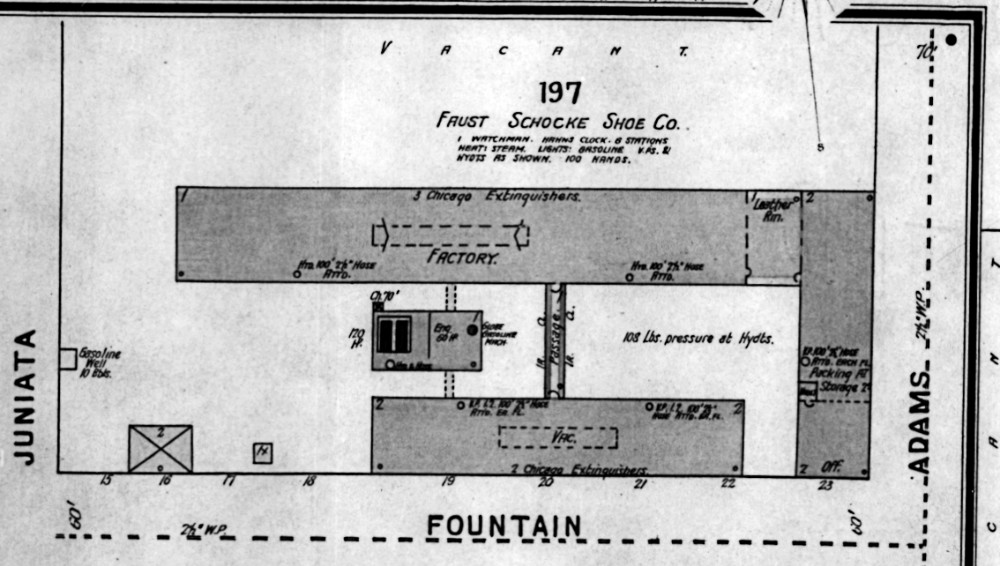
We’ve included this shoe factory here because it was located in the buildings that later housed Towles and Gabrill Textile Companies.
FAUST SHOE FACTORY
from Havre de Grace – Its Historic Past, its charming present, and its promising Future,
J. Faust & Son moved their Baltimore shoe factory to Havre de Grace in 1889 and by mid-January 1890 the new facility began work when steam was “turned on by Miss Sue Jackson.” They made “Gentlemen, Ladies, Misses, Children and Infants’ Shoes in every variety , of a high grade, which meets the requirements and demands of the best trade in all sections of the United States and West Indies.
The factory fronted on Adams Street for four blocks between Fountain and Bourbon Streets and ran back to Juniata. As described in 1889 by the Havre de Grace Republican “This is a section of our city that has heretofore been farm land, surrounded by a fine hedge fence, and is now planted in tomatoes; but osage orange fences and tomato fields must give way before the spirit of improvement now manifesting itself.” Previously the farm had given employment to one or two individuals, but with the new factory there were upwards of two hundred hands obaining daily employment . . .
. . . by early 1896 the factory was vacant . . .
by Jack L. Shagena, Jr. and Henry C. peden, Jr., (c) 2018
TEXTILE
It may surprise you to learn that we also had textile mills in our city.
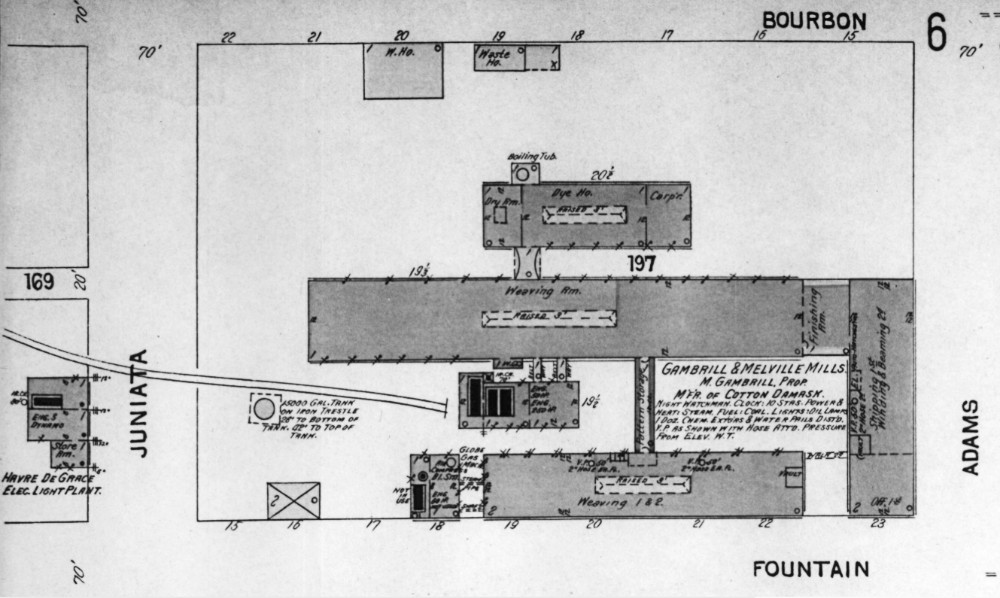
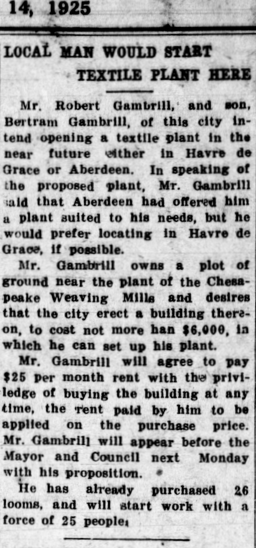
GAMBRILL & COMPANY TEXTILE WORKS
By the late summer of 1897 the textile works of M. Gambrill & Company had been partially relocated from Cecil County to Havre de Grace with 40 looms turning out cotton table cloths. The Harford Democrat of August 13, 1897 noted, “When the plant is in full operation 210 looms will be used in the manufacture of cotton goods. A 250 horse power engine has been put in, which will take the place of the one now in use, which is inadequate. It is stated that when the plant is in full operation about 300 hands will be given steady employment.” As a result of the textile plant coming to the city all of the available tenant houses had been occupied and about 40 new families had moved into Havre de Grace.
from Havre de Grace – Its Historic Past, its charming present, and its promising Future,
by Jack L. Shagena, Jr. and Henry C. peden, Jr., (c) 2018
CLICK HERE for more info re: the housing needed for these workers
on the historic havre de grace website
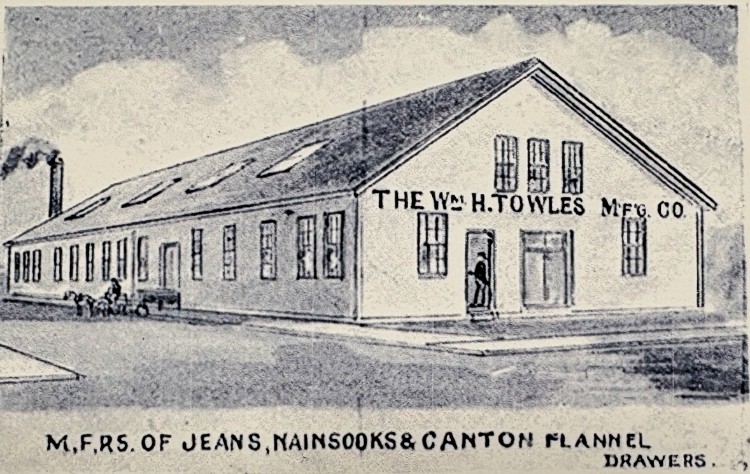
1907 – TOWLES MANUFACTURING COMPANY
The 1907 Bird’s Eye View Map of Havre de Grace has an image of the William H. Towles Manufacturing Company, maker of Jeans, Nainsooks & Canton Flannel Drawers. The flannel products were night-drawers that are known today
as pajamas where sometimes the top included a hood for a more
comfortable sleep during a cold three-dog night.
from Havre de Grace – Its Historic Past, its charming present, and its promising Future,
by Jack L. Shagena, Jr. and Henry C. peden, Jr., (c) 2018
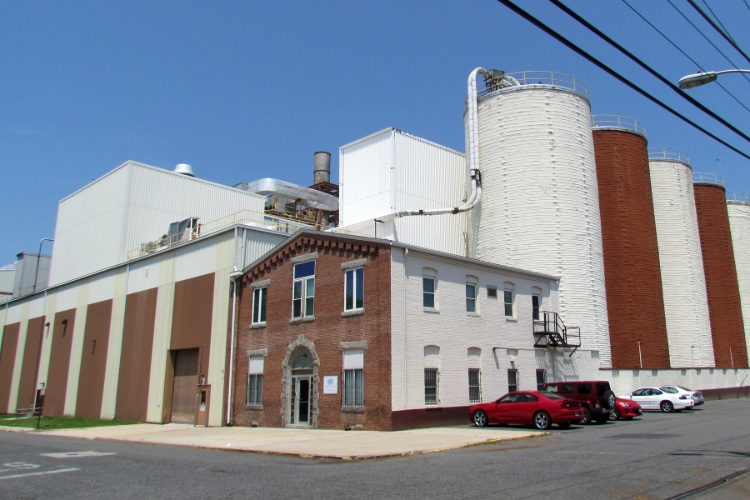
Part of the present-day Evonik properties (many will know as Huber previously) CLICK HERE for more info.
1920 PRINCESS WEAVING MILL
1930 HARFORD MILLS INC
and MARGERSON BINNS COMPANY
In 1921, Sanborn Maps show the Princess Weaving Mill (which went into receivership in 1921) while 1930 shows the Harford Mills, Inc., manufacturers of cotton textiles, and Margerson Binns Company, which made towels. Harford Mills advertised its machinery and looms for sale in the Democratic Ledger in 1935, before they closed down.
from historic havre de grace website
In looking back, we pay tribute to the hardy citizens
who continued to put their shoulders to the wheel,
creating the city we enjoy today. Their perseverance,
even when half to two-thirds of the town was burned in 1813,
leaving many families homeless and destitute, was steadfast.
It’s also interesting to note that our fine city, with its amazing historic buildings, is a result of residents caring about our history over the centuries.
George, our casual historian, encourages you to visit the main blog page and scroll through the posts for more stories. You are also encouraged to stop in at Bahoukas Antique Mall and browse more than a dozen cases and a huge wall of Havre de Grace History memorabilia! Be sure to say ‘hi’ to George!
Stay tuned for our next blog posts – #6 and #7 Havre de Grace – a growing city.